A different kind of property
Vacant land insurance.
No building doesn’t mean no liability.
An empty lot may have no roof to replace, but a property owner can still face an injury or property-damage claim. Access, terrain, water, and activities on the land all affect that exposure. A quiet residential lot and a parcel used for recreation are different insurance risks.
Get a land insurance quote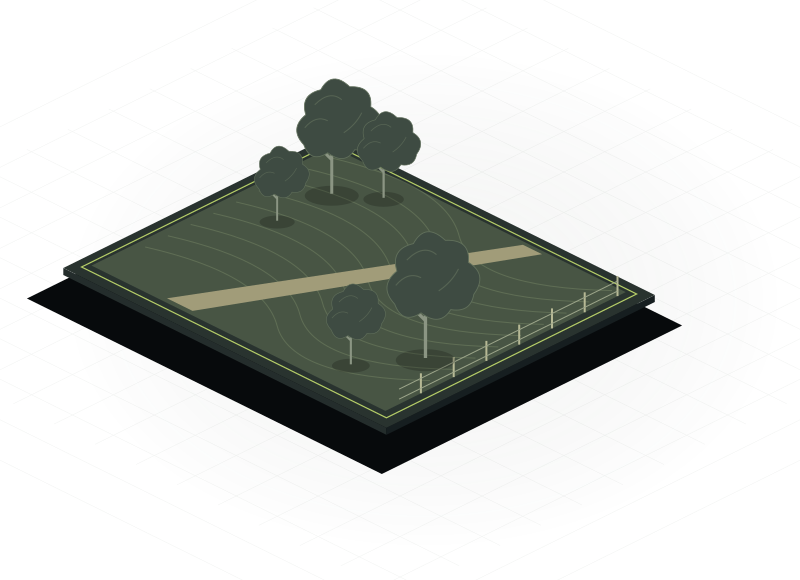
The short answer
What does it
mean for you?
Vacant land insurance generally focuses on liability associated with owning the parcel. It may help with covered claims and defense costs, depending on the terms. It is not a policy for replacing the land’s market value. Buildings, improvements, leases, and business activities can change which coverage is appropriate.
 Property photography for illustration.
What liability coverage actually does
Someone may claim that a condition on the property caused an injury or damaged their property. Liability insurance can respond to covered claims, including a legal defense as described by the policy. Ownership alone doesn’t settle whether you are legally responsible, and an accident on the land doesn’t guarantee a payment.
When land is no longer “vacant” for insurance
Everyday descriptions can be misleading. A lot with a shed, fence, driveway, or other improvement may not meet a particular policy’s definition of vacant land. Recreation, grazing, storage, or a lease can also change the classification. Those details explain why two parcels of the same acreage can need different arrangements.
Could a homeowners policy already cover it?
Some homeowners policies extend liability coverage to qualifying vacant land owned by the insured. Whether that applies depends on the policy, ownership, improvements, and use. A parcel held in an LLC or used for business may raise different questions from a lot owned personally and left unused.
From open lot to construction site
Once construction starts, the exposure includes the project itself, materials, and people working at the site. Vacant land liability coverage does not automatically become construction insurance. Builders risk and the owner’s liability each have a role, and the change should be arranged before work begins.
Coverage during constructionWhy acreage is only part of the cost
A larger parcel isn’t automatically the more complicated risk. How people access and use the land, the presence of water or structures, and the requested liability limit can matter alongside acreage and location.
Vacant land insurance costCoverage at a glance
The land’s use matters as much as its size.
- A bare residential lot may qualify differently from land with a structure.
- Hunting, riding, grazing, or leasing introduces activities beyond simple ownership.
- A pond or other water feature adds exposure that needs specific consideration.
- Construction creates new property and liability concerns.
Available coverage, exclusions, and limits depend on the actual policy.
Get a land insurance quoteYour questions, answered.
What does vacant land insurance cover?
Vacant land insurance commonly focuses on liability associated with ownership of the parcel. It can address covered claims and legal defense as described by the policy. It is not coverage for replacing the land’s market value. Structures, activities, and leases can change whether a parcel qualifies.
Link to this answerWhy would an empty lot need liability insurance?
A person can claim that a condition on the land caused an injury or damaged their property. The absence of a building does not eliminate that possibility. Liability coverage can respond to covered claims, but an incident on the parcel does not automatically establish the owner’s legal responsibility or guarantee payment.
Link to this answerCould my homeowners policy already cover my vacant land?
Possibly. Some homeowners policies extend liability protection to qualifying vacant land owned by the insured. Ownership, improvements, location, and use can affect whether the extension applies. Land held by a business or used for an activity may fall outside the relevant definition.
Link to this answerIs land still vacant if it has a shed, driveway, fence, or other improvements?
A parcel that looks empty may not meet a policy’s definition of vacant land. Structures and improvements can change its classification or create additional property exposures. A shed, fence, or driveway does not have the same significance under every policy; the definition and the actual features control.
Link to this answerCan land with a pond, lake, or stream be considered?
Water features require individual consideration. Their presence, access, and use can affect the liability exposure. A pond nobody uses is different from one open for swimming or fishing. Whether coverage is available, and which exclusions apply, depends on the property and insurer.
Link to this answerWhat if people hunt, ride ATVs, graze animals, or lease the land?
Those uses can move the exposure beyond simple ownership of unused land. Recreation, farming, business operations, and leases may need different coverage or specific permission under a policy. A vacant land policy does not automatically insure every activity that takes place on the parcel.
Link to this answerWhat changes when construction starts on my land?
The property becomes a construction site with work, materials, and people on it. Vacant land liability coverage does not automatically expand to insure the project. Builders risk can address covered project property, while the owner’s and contractor’s liability remain separate concerns.
Link to this answerWhat affects vacant land insurance cost?
Acreage is one factor, but the parcel’s use and features can be just as important. Water, structures, recreation, leases, and access affect liability exposure. The amount of liability insurance and available insurer options also influence price. An empty-lot premium is not a universal per-acre rate.
Link to this answerA closer look at coverage
Insurance terms,
in plain language.
Basic, broad, and special forms explain which causes of property damage may be covered. Replacement cost and actual cash value explain how covered damage may be valued. Liability coverage is a separate question.
When you’re ready
Need insurance
for your property?
Start my quoteA quote brings the coverage, price, and terms together for the property you own.